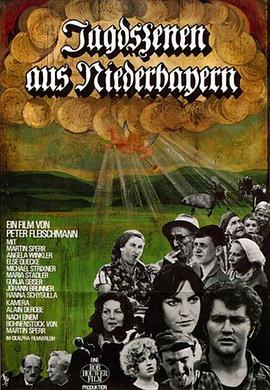
ynopsis from Time Out Film Guide Between the seemingly idyllic opening and closing scenes depicting a rural community, first at church, then at the village festival, Fleischmann attacks that community's prejudices and ignorance without remorse. His very precisely observed portrait of Bavarian life begins with little more than a display of the villagers' constant ribbing, bawdy humour, continuous gossip, and more than a hint of their slow-wittedness. With the return of a young man, their idle malice and childish clowning, always on the edge of unpleasantness, receive some focus quite without foundation, the lad is victimised as a homosexual. The crippling conformity of their ingrained conservatism leads the villagers to reject anything 'different' a young widow is ostracised, more for her crippled lover and idiot son than her morals; a teacher is frozen out because she's educated; the casual destruction of the young 'homosexual' is given no more thought than the cutting up of a pig. Not Germany in the '30s but the '70s; nevertheless the political parallels are clear. An impressive film.
The indie centers on a South Asian family in Toronto and the suburb of Scarborough. Ash is caught between two worlds he must constantly traverse, one that of an aspiring writer in Toronto and that of his family in the immigrant-rich suburb of Scarborough.
This is about Adam (45) owns a kennel. He is a profoundly good and generous, almost naive, man who struggles with depression and eco-anxiety. Via the technical support number for a light therapy lamp he recently purchased, he meets Tina (45), a settled, i
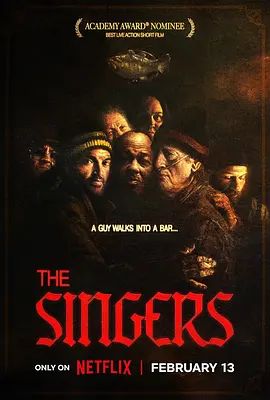
"The Singers" is a genre-bending film adaptation of a 19th-century short story written by Ivan Turgenev, in which a lowly pub full of downtrodden men connect unexpectedly through an impromptu sing-off. The film explores the compl